
MCT and ketogenic therapy, in people and in dogs
Adrian P. Balahadia, Founder & CEO · 13 November 2026 · 2 min read
Written for formulators and buyers in nutrition, supplements and pet food. A summary of published research, not medical advice.
The ketogenic diet has a long-established clinical role in managing certain forms of drug-resistant epilepsy, particularly in children. It is prescribed and supervised by medical teams, and it is hard to follow: the classic version allows very little carbohydrate.
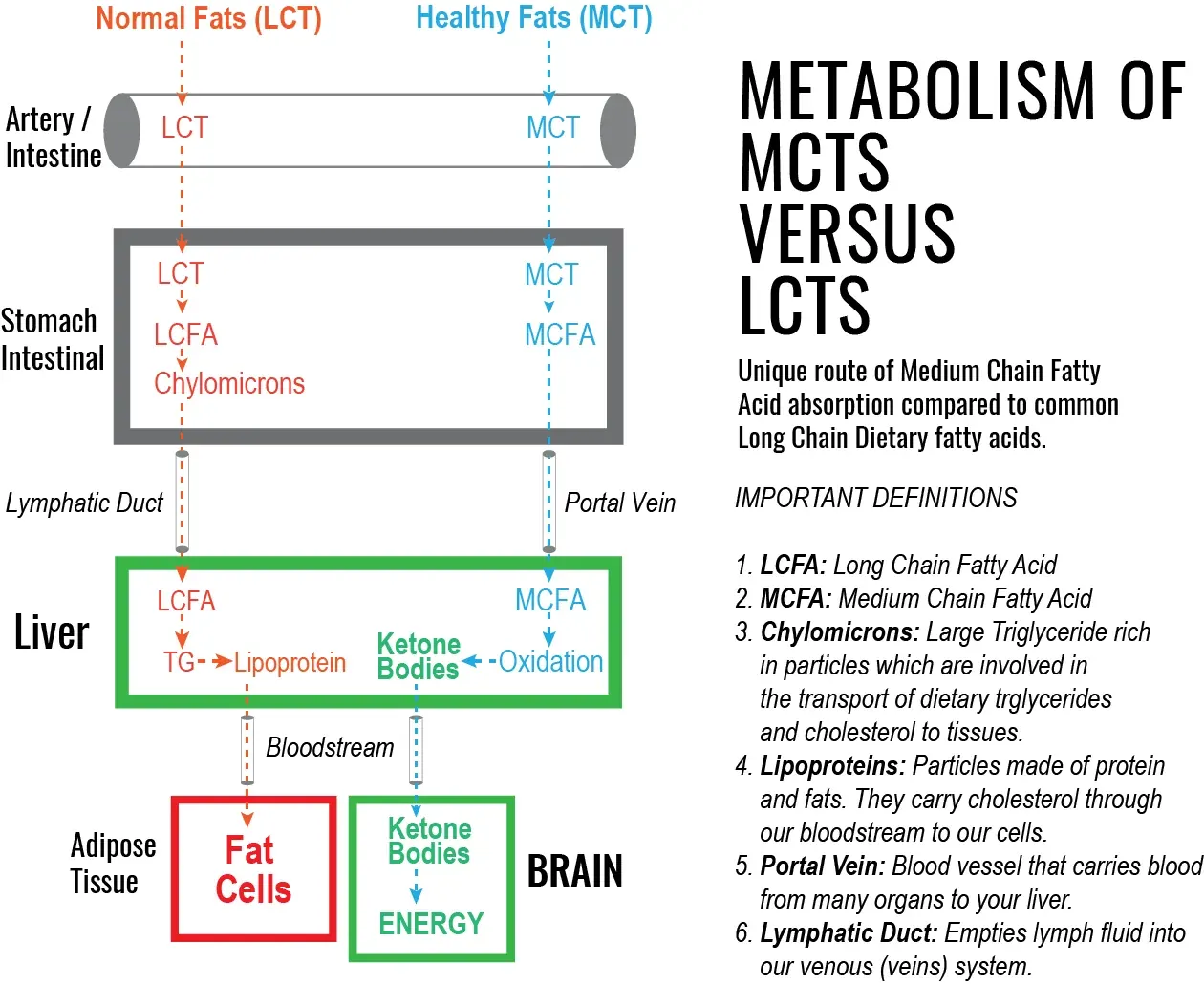
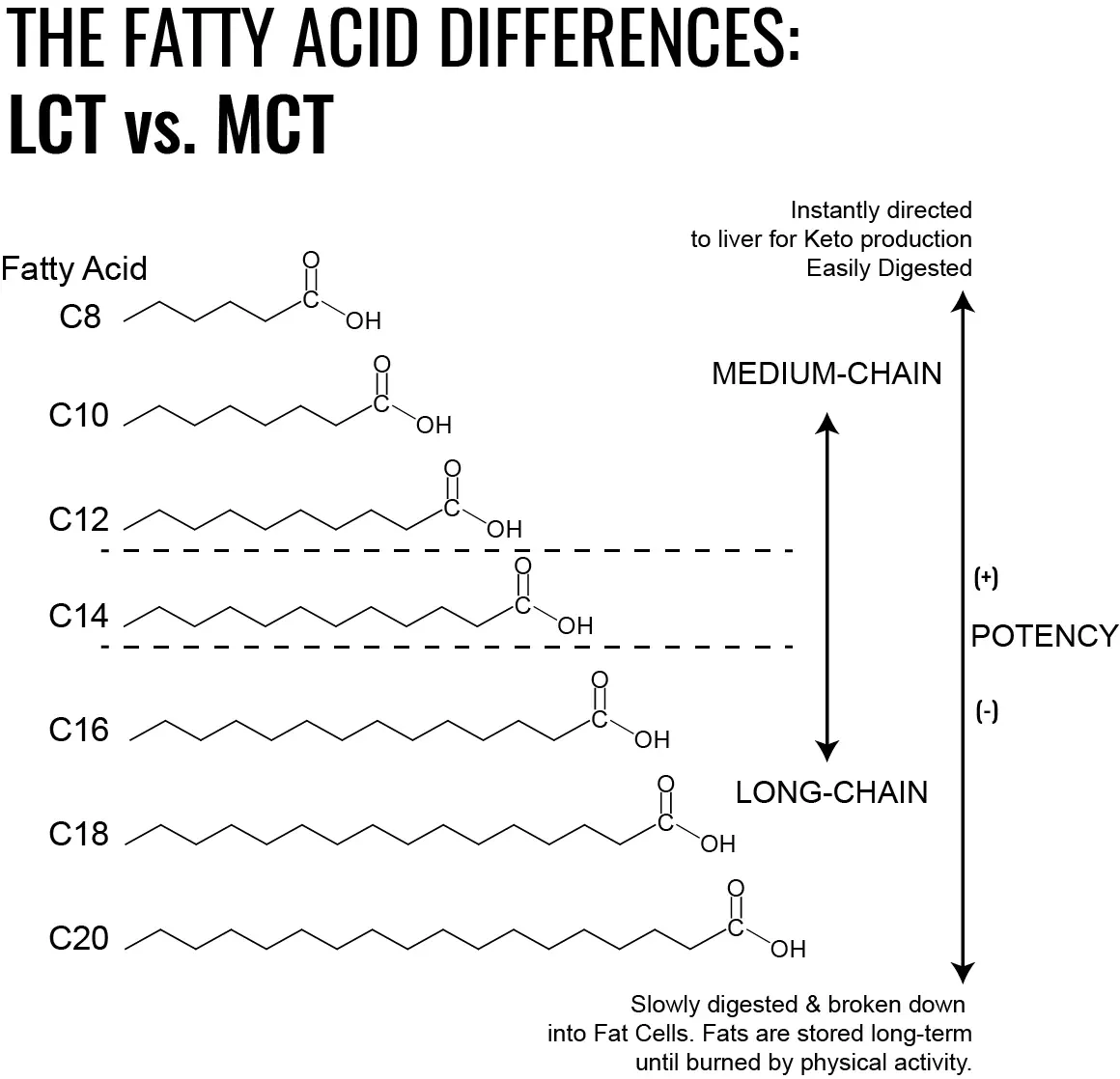
MCT is part of the reason it became easier. Because MCT raises blood ketones more readily than other fats, an MCT version of the diet has been used since the 1970s, allowing more carbohydrate and protein while keeping ketone levels up. MCT is not a treatment for epilepsy in itself, and it never replaces prescribed medication.
Dogs with epilepsy: a first trial (2015)
Idiopathic epilepsy is the most common chronic neurological condition in dogs, and many dogs keep having seizures despite medication. Law and colleagues at the Royal Veterinary College compared a diet containing 5.5% MCT with a placebo diet in 21 such dogs, in a randomised crossover trial. They reported an anti-seizure effect and a significant rise in blood beta-hydroxybutyrate on the MCT diet. A further study in 2020, with MCT oil added to the dogs' usual food, reported similar results.
Twenty-eight dogs, six months (2022)
Berk and colleagues then followed 28 dogs with idiopathic epilepsy through a six-month, randomised, double-blind crossover trial run at several veterinary centres. The dogs stayed on their anti-seizure medication and received either an MCT oil supplement, at 9% of their daily energy, or a control oil.
Seventeen of the 28 dogs had fewer seizures during MCT supplementation, and five had their seizure frequency at least halved. The researchers also measured clear changes in the dogs' amino-acid metabolism and in the neurotransmitters excreted in their urine, which they present as clues to how MCT acts, while noting that these pathways are still poorly understood.
What this does and doesn't say
These are controlled veterinary trials with a measurable effect in some dogs and not in others, always alongside medication and under veterinary care. They are why MCT diets and supplements for dogs with epilepsy are now sold through vets, and why pet nutrition has become a market for MCT in its own right.
For a formulator in pet food or pet supplements, that means MCT oil or powder made to the same food-grade standard as for human nutrition, with the documents to prove it for every batch.
Sources (2)
- Law TH, Davies ES, Pan Y, Zanghi B, Want E, Volk HA. A randomised trial of a medium-chain TAG diet as treatment for dogs with idiopathic epilepsy. British Journal of Nutrition 114 (2015) 1438–1447. doi:10.1017/S000711451500313X
- Berk BA, Ottka C, Law TH, et al. Metabolic fingerprinting of dogs with idiopathic epilepsy receiving a ketogenic medium-chain triglyceride (MCT) oil. Frontiers in Veterinary Science 9 (2022) 935430. doi:10.3389/fvets.2022.935430

More from Insights


Talk to a person.
Tell us the product, the quantity and where it's going. Someone on our team replies, not a ticket system.