
MCT, energy expenditure and body fat: what the research says
Adrian P. Balahadia, Founder & CEO · 13 November 2026 · 2 min read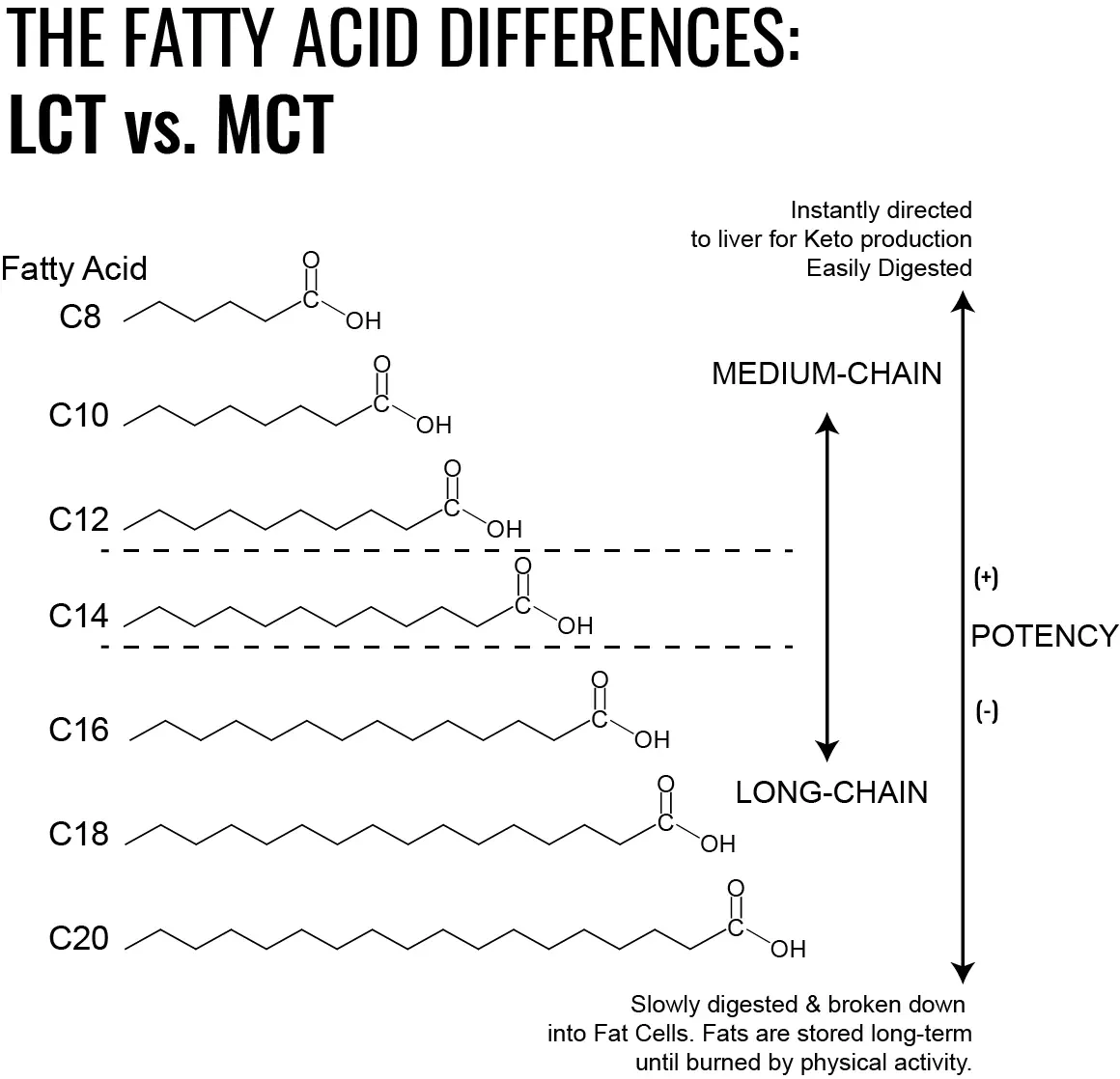
Written for formulators and buyers in nutrition, supplements and pet food. A summary of published research, not medical advice.
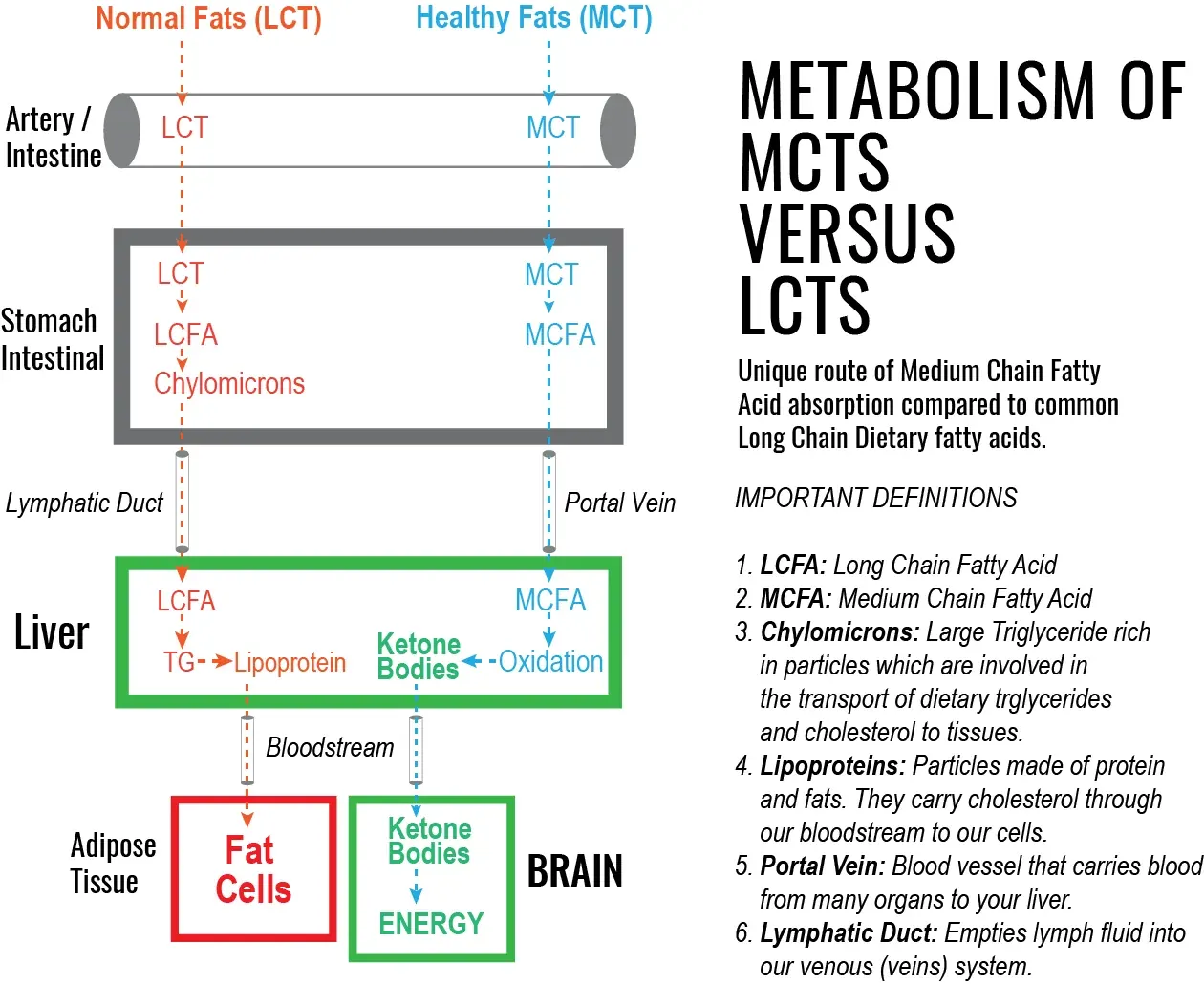
MCT is digested differently from the long-chain fats that make up most of what we eat. Medium-chain fatty acids are absorbed straight into the portal vein and carried to the liver, where they are oxidised quickly. Long-chain fatty acids travel through the lymph and enter the general circulation first. Researchers have asked whether that difference shows up in energy expenditure and body fat.
Twenty-four men, twenty-eight days (2003)
St-Onge and colleagues at McGill University ran a randomised crossover trial with 24 healthy, overweight men. Each man ate a diet rich in an MCT oil blend for 28 days and a diet rich in olive oil for another 28 days, with energy expenditure measured by indirect calorimetry and body fat by MRI.
Upper-body fat fell by 0.67 kg on the MCT diet against 0.02 kg on the olive oil diet. Whole-body fat under the skin showed a trend in the same direction that was not statistically significant. Energy expenditure was slightly higher with MCT on day 2; by day 28 the difference was no longer significant.
An approved claim in Japan (2008)
In Japan, the Nisshin OilliO Group developed a cooking oil made from medium- and long-chain triglycerides, which keeps MCT's digestion while frying like an ordinary oil. Its researchers reviewed the long-term clinical trials behind it, which found less body fat accumulation with MCT and with the new oil than with ordinary long-chain fats.
Japan's authorities approved that oil as a Food for Specified Health Use (FOSHU), with the claim that it suppresses body fat accumulation. The review was written by the company's own researchers, which is worth knowing, but the approval is a regulator's, after its own review.
What this does and doesn't say
The effects in these studies are measurable and modest, in specific groups, over weeks rather than years. They describe MCT replacing other fats in a controlled diet, not MCT added on top of an ordinary one. MCT is not a weight-loss product, and a body-fat claim is only ever made for a specific product, under the rules of a specific market, as the Japanese approval shows.
For a formulator, the relevant products are meal replacements and nutrition products in which MCT replaces part of the fat. MCT powder suits dry formulas; the oil suits liquid ones.
Sources (2)
- St-Onge MP, Ross R, Parsons WD, Jones PJH. Medium-chain triglycerides increase energy expenditure and decrease adiposity in overweight men. Obesity Research 11 (2003) 395–402.
- Takeuchi H, Sekine S, Kojima K, Aoyama T. The application of medium-chain fatty acids: edible oil with a suppressing effect on body fat accumulation. Asia Pacific Journal of Clinical Nutrition 17 (S1) (2008) 320–323.

More from Insights


Talk to a person.
Tell us the product, the quantity and where it's going. Someone on our team replies, not a ticket system.