
Acacia or tapioca: choosing a carrier
MCT oil is a liquid at room temperature. To make a powder of it, the oil has to be spray-dried onto a carrier — and that carrier is doing more work than most labels suggest. It decides how the powder flows, how it tastes, how it reads on a nutrition panel and what it costs.
Adrian P. Balahadia, Founder & CEO · 27 October 2026 · 5 min read
What acacia fibre is
Acacia fibre, also called gum acacia or gum arabic, is a natural exudate harvested from the sap of Acacia senegal and related acacia trees, grown mainly across the Sahel region of Africa. Chemically it is a complex, highly branched polysaccharide composed mainly of galactose, arabinose, rhamnose and glucuronic acid. Unlike starches, it is classified as a soluble, non-digestible dietary fibre: it passes through the small intestine largely intact and is fermented slowly by bacteria in the colon.
It is dried and milled, and that is the whole of the processing. Acacia has a long history in the food and pharmaceutical industries as an emulsifier, stabiliser, film-forming agent and tablet binder, valued for the protective coating it forms around sensitive ingredients such as flavours, vitamins and oils.
What tapioca starch is
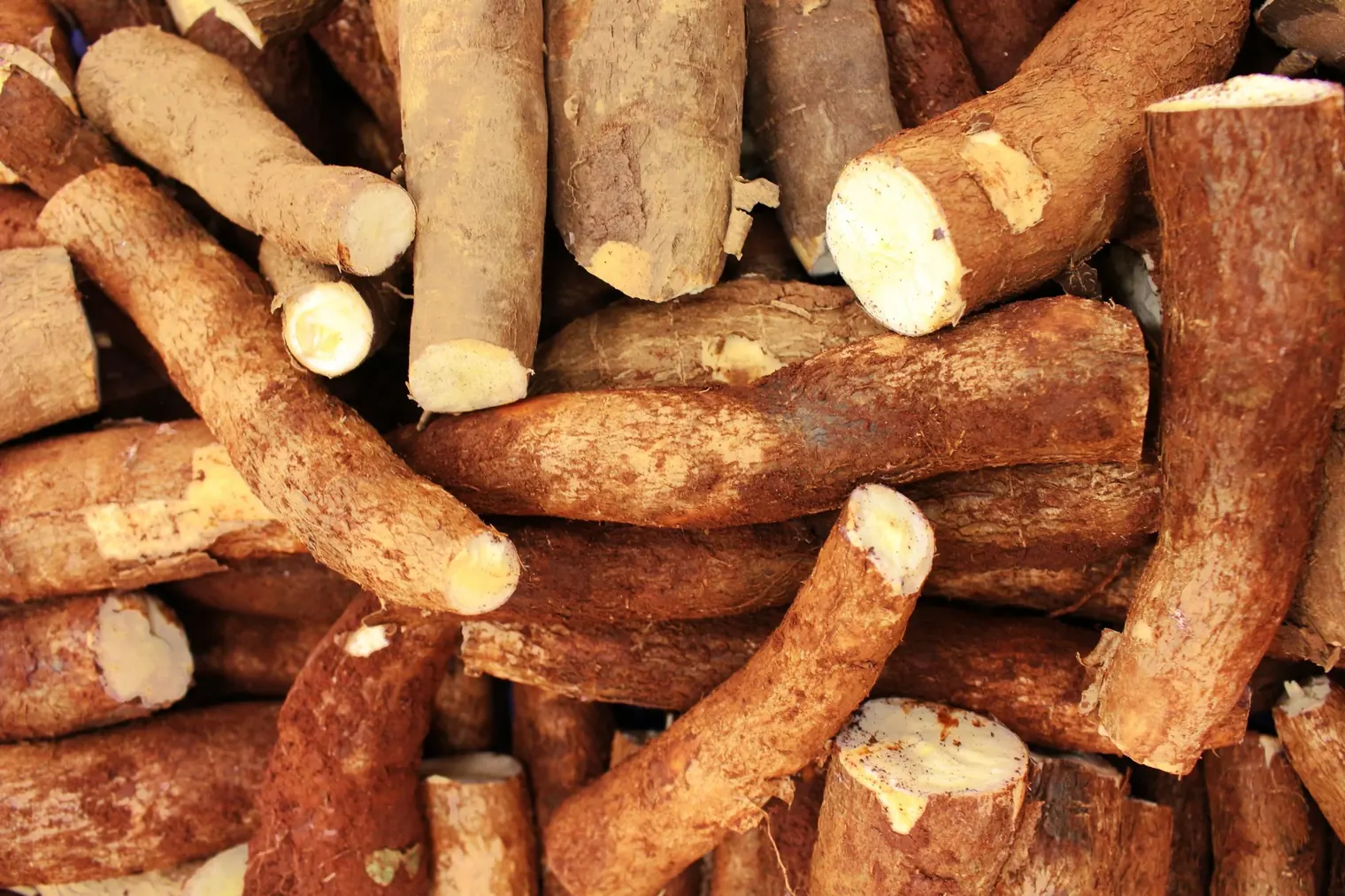
Tapioca starch is the starch of the cassava root, unmodified and not hydrolysed. It is a digestible carbohydrate, and in a spray-dried powder it is a plain, neutral carrier.
It is worth being precise here, because the market is not. Most MCT powders sold on a "tapioca" carrier are made with tapioca maltodextrin, which is cassava starch broken down enzymatically into shorter glucose chains. That is a different ingredient from the starch, and it is why our own label says no maltodextrin: our tapioca powder is made with tapioca starch.
What each one does in the powder
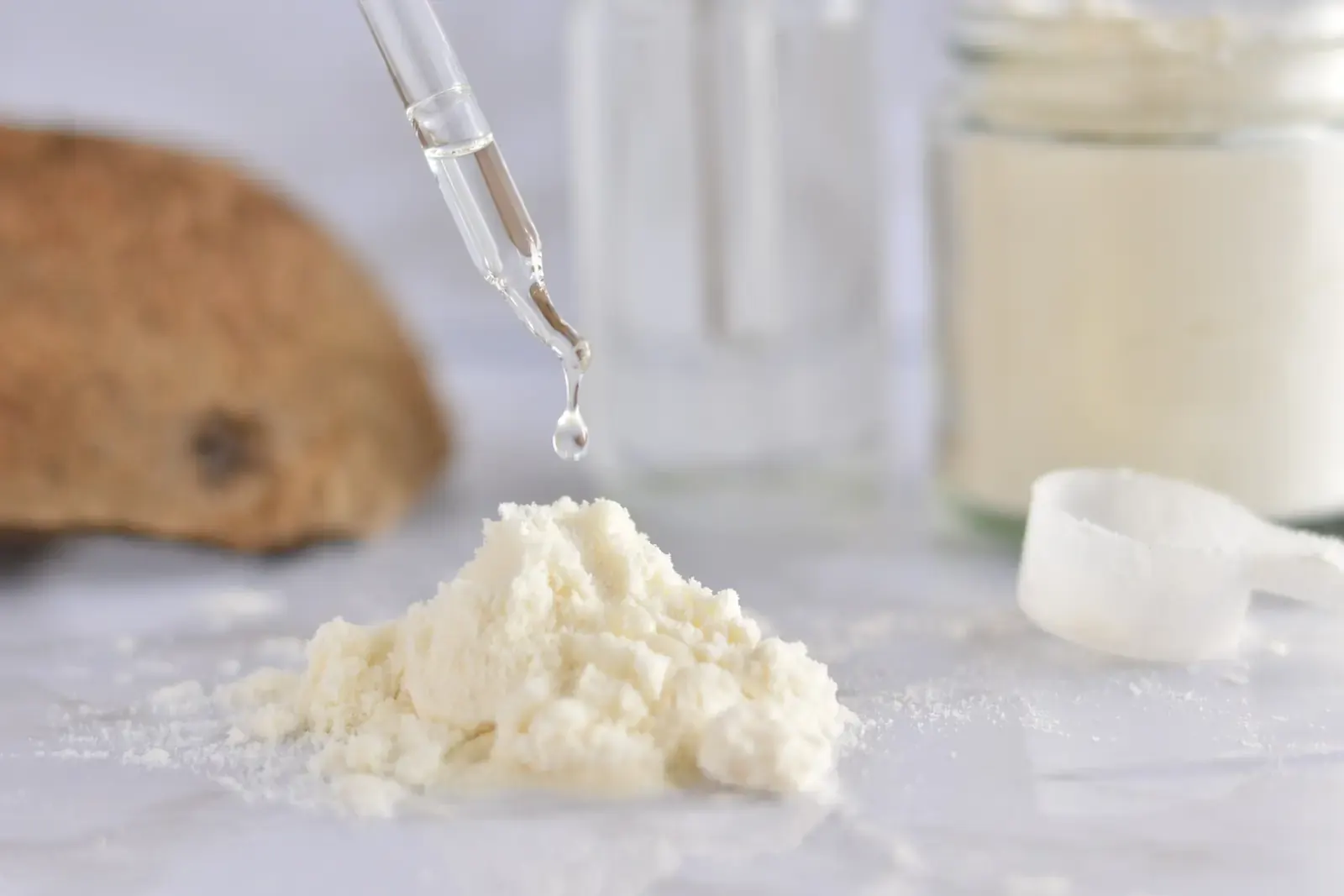
Acacia fibre's branched structure gives it strong natural emulsifying properties. It doesn't only trap the oil mechanically; it stabilises the oil-and-water interface while the emulsion is being spray-dried, which produces a more stable emulsion, better encapsulation and a film around each droplet of oil that helps protect the MCT from oxidation in storage. It is essentially flavourless and dissolves well in cold liquids, so it disappears into coffee, shakes and smoothies without adding sweetness or a starchy note.
Tapioca starch carries the oil without contributing flavour of its own, and it dissolves into a creamy, slightly rounded drink. That is a quality, not a compromise: it is what makes a tapioca powder a good dairy-free creamer for coffee and tea, where a fibre carrier can read as thin.
How each one labels
This is the difference that usually decides the choice, and it is a labelling fact rather than a claim.
Acacia fibre is counted as dietary fibre, so a powder on acacia carries fibre on its panel — about 27 g per 100 g — with about 2 g of carbohydrate. Tapioca starch is counted as carbohydrate: under 1 g of fibre per 100 g, and about 26 g of carbohydrate. Same oil, same 70%, two very different nutrition panels.
Which one suits your product depends on what the panel has to say. A low-carb or fibre-forward product wants the acacia carrier. A creamer, a dairy-free whitener or a product where the carbohydrate is unremarkable in the context of the whole formulation has no reason to pay for fibre it isn't selling.
Acacia fibre as an ingredient in its own right
Because acacia is a soluble fibre, it is fermented in the colon by bacteria such as bifidobacteria, which is why it is often sold as a prebiotic fibre in its own right. Intakes of roughly 5 to 10 g a day are described in the literature as well tolerated by healthy adults.
For a formulator that means the carrier is not inert: a powder on acacia brings a fibre content you can put on the panel alongside the MCT. A starch carrier does not do this, because it is digested as glucose rather than fermented as fibre.
Clean label and allergens
Both carriers are vegan, non-GMO, gluten-free and free of major allergens, and both are declarable in one word on an ingredient list. Acacia has the additional advantage of being a minimally processed plant exudate — harvested and dried, rather than chemically or enzymatically broken down — which is what brands mean when they describe it as clean label.
Where the trade-offs lie
A fair comparison has to say what acacia is not good at, and there are four things:
- Cost. Acacia fibre is significantly more expensive than a starch carrier, and that difference reaches the shelf price of the finished product.
- Tolerance at high doses. Like many fermentable fibres, acacia can cause bloating or gas in sensitive people if a lot is taken at once, particularly when it is introduced quickly.
- Oil-load ceiling. Some processors find it marginally more demanding to reach very high oil payloads with acacia than with a starch-based system, though modern encapsulation-grade acacia has largely closed that gap.
- Sourcing. As a natural exudate harvested largely from one region of Africa, acacia's quality and supply vary more than an industrially manufactured carrier's.
Those four are exactly why starch carriers stay common, and why we keep both: for a great many products the starch carrier is the right engineering answer and the right price.
So which should you use?
Choose acacia fibre when the product is sold on being low in carbohydrate or high in fibre, when you want the carrier to contribute something to the panel, or when the powder has to sit in cold liquid and disappear.
Choose tapioca starch when you are making a creamer or a drink where a creamy, neutral result matters most, when the carbohydrate is immaterial to the formulation, or when cost per kilo decides the product.
Both of ours take either oil, C899 or 6040, so the carrier decision and the grade decision are independent. If you tell us the product and the market, we'll suggest a combination and send samples of more than one.
Sources (5)
- Utama, A.H., Al Awwaly, K.U., Radiati, L.E. "The effectiveness of Sumbawa fermented mare's milk powder with gum arabic microencapsulant." 2025. agris.fao.org
- "Tapioca Dextrin as an Alternative Carrier in the Spray Drying of Fruit Juices." PMC. ncbi.nlm.nih.gov/pmc/articles/PMC7466301/
- "Effect of Carrier Agents on the Physicochemical and Technofunctional Properties of Freeze-Dried Pomegranate Juice Powder." PMC. ncbi.nlm.nih.gov/pmc/articles/PMC7600028/
- Gum arabic (acacia gum). FAO/WHO Joint Expert Committee on Food Additives, specification monograph.
- Phillips, G.O. and Williams, P.A. (eds). Handbook of Hydrocolloids. Woodhead Publishing — the standard reference for gum arabic and starches.
Written as a formulation reference, not as dietary advice. Anyone with a fibre sensitivity or a digestive condition should introduce a new fibre gradually and ask their own healthcare provider.

Talk to a person.
Tell us the product, the quantity and where it's going. Someone on our team replies, not a ticket system.